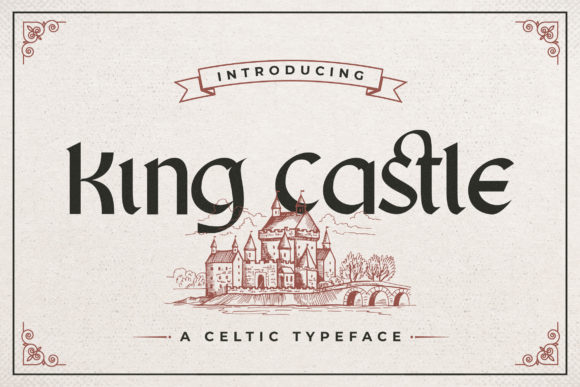
King Castle: Elevating Design with Celtic-Inspired Elegance
In the vast landscape of digital and print typography, finding a typeface that strikes the perfect balance between historical gravitas and modern usability is a challenge for many designers. While sans-serif fonts dominate the realm of minimalism and serif fonts provide traditional reliability, there exists a niche category where history meets artistic flair: display fonts with distinct cultural roots. Among these, King Castle stands out as a sophisticated choice for those seeking to infuse their projects with an air of ancient mystique and refined elegance.
King Castle is not merely a font; it is a stylistic statement inspired by intricate Celtic artistry. Its design language draws heavily from the interlacing patterns, sharp angles, and ornamental flourishes characteristic of early medieval manuscripts and stone carvings. This unique aesthetic makes it particularly appealing for projects that require immediate visual impact, whether in high-end branding, event invitations, or creative packaging. By understanding the specific characteristics and versatile applications of King Castle, creators can leverage its cool and original look to elevate their work beyond standard typographic conventions.
The Anatomy of Celtic Influence in Typography
To truly appreciate King Castle, one must first understand the broader context of Celtic-inspired type design. Celtic lettering is renowned for its complexity, often featuring knots, spirals, and cross-hatching that mimic the organic flow of nature and the geometric precision of metalwork. Unlike standard serif fonts that rely on subtle footnotes at the ends of strokes, Celtic styles integrate decoration into the very structure of the letters themselves.
- Interlacing Elements: Many characters in King Castle feature subtle crossings and overlaps, echoing the famous Book of Kells or High Crosses found throughout Ireland and Scotland.
- Sharp Serifs and Angles: The font retains a strong structural backbone with pronounced, angular serifs that give it a sturdy, castle-like appearance, justifying its name.
- Ornamental Distinctiveness: Specific letters may include decorative swashes or extended terminals that add a layer of luxury and exclusivity to any text block.
This design philosophy ensures that King Castle is not just readable but also visually arresting. It commands attention without sacrificing legibility, provided it is used correctly. The "cool and original look" mentioned in its description stems from this fusion of rugged historical strength and delicate artistic detail, making it a favorite among designers who want to avoid the generic feel of widely available web fonts.
Strategic Applications for Professionals and Brands
The versatility of King Castle extends across various professional domains, offering solutions for businesses and individuals alike. Because it is a display font, its primary function is to capture attention quickly. This makes it ideal for headlines, logos, and key visual elements rather than body copy. Below are several practical scenarios where King Castle excels.
Branding and Identity Design
For businesses aiming to project heritage, craftsmanship, or luxury, King Castle provides an instant association with quality and tradition. A boutique distillery, an artisanal bakery, or a law firm specializing in heritage cases might use King Castle for their logo or main brand mark. The font’s elegant curves and structured form convey stability and timelessness. When paired with a clean, minimalist sans-serif for secondary information, the contrast creates a balanced hierarchy that guides the viewer’s eye effectively.
Consider a craft brewery launching a new stout. Using King Castle for the word "Stout" on the label immediately suggests a product with depth and character. The Celtic undertones hint at old-world brewing techniques, appealing to consumers who value authenticity over mass production.
Event Stationery and Invitations
One of the most common and effective uses for King Castle is in stationery design. From wedding invitations to formal gala announcements, the font adds a touch of regal sophistication. The intricate details of the letters complement other decorative elements such as gold foil stamping, embossing, or floral borders. Because the font has a wide range of appeal, it works well for both traditional black-tie events and more bohemian, rustic-chic gatherings that draw inspiration from natural or historical themes.
When designing letterheads or business cards, using King Castle for the company name or tagline can differentiate a brand in a crowded market. It signals that the business pays attention to detail and values aesthetics. For example, a graphic designer or photographer might use King Castle in their portfolio header to showcase their eye for unique, non-traditional design choices.
Packaging and Product Labels
In retail environments, shelf presence is critical. Products that utilize King Castle on their packaging stand out due to the font’s distinctive silhouette. This is particularly relevant for industries like cosmetics, jewelry, and specialty foods. A perfume bottle labeled with King Castle suggests an exotic, perhaps mystical scent profile. Similarly, artisanal chocolate bars or premium teas benefit from the font’s ability to evoke a sense of indulgence and rarity.
Creative Workflows and Implementation Tips
While King Castle is powerful, its effectiveness depends entirely on how it is implemented. Misuse can lead to cluttered designs or readability issues. To get the most out of this elegant display font, consider the following best practices for workflow integration.
- Limit Usage to Headlines: As a display font, King Castle should generally not be used for long paragraphs of text. The intricate details can become muddy at small sizes, causing eye strain for the reader. Reserve it for titles, subtitles, pull quotes, and short phrases.
- Pair with Complementary Typefaces: Balance the complexity of King Castle with simplicity. Pair it with a neutral sans-serif (like Helvetica or Open Sans) or a classic serif (like Garamond or Baskerville) for body text. This contrast highlights the uniqueness of King Castle while ensuring the overall design remains accessible.
- Pay Attention to Kerning and Spacing: Due to the ornamental nature of some characters, automatic kerning may not always be perfect. Manually adjusting the space between letters, especially when combining capital letters, can enhance the visual rhythm. Generous tracking (letter-spacing) often helps display fonts breathe better.
- Consider Color and Texture: King Castle shines when enhanced with texture. Think about how it looks in metallic foils, debossed paper, or even distressed textures for a vintage effect. The font’s sharp edges catch light differently than rounded fonts, adding physical dimension to print materials.
Target Audiences and Cultural Resonance
The appeal of King Castle is broad, touching upon several distinct audience segments. Understanding who resonates with this style helps in tailoring marketing messages and design strategies.
Hobbyists and Crafters: For those engaged in scrapbooking, card making, or DIY home decor, King Castle offers a ready-made solution for adding a professional finish to personal projects. It allows amateur designers to achieve a polished, editorial look without extensive typographic training.
Educators and Researchers: In academic or historical contexts, King Castle can be used to highlight chapter headings or section breaks in presentations and printed materials related to history, archaeology, or literature. It adds a layer of thematic consistency to content dealing with medieval studies or European history.
Business Owners: Entrepreneurs looking to establish a brand identity rooted in trust and longevity find King Castle useful. It communicates that a business is established and reliable, leveraging the psychological association of castles and castles with security and permanence.
Comparative Advantages Over Other Display Fonts
Why choose King Castle over other Celtic or gothic-inspired fonts? Many alternative options lean too heavily into the "dark" or "medieval" aesthetic, which can feel dated or overly aggressive. King Castle mitigates this by maintaining an "elegant" tone. It is less jagged and more refined, making it suitable for upscale markets that might otherwise reject bolder, rougher typefaces.
Furthermore, its "cool and original look" sets it apart from the plethora of similar fonts available on stock libraries. By choosing a font with a specific narrative—Celtic elegance—designers create a subconscious connection with the audience. This narrative depth is a valuable asset in storytelling through design, allowing brands to communicate values of heritage, craftsmanship, and uniqueness without saying a word.
Conclusion on Design Impact
In summary, King Castle is more than just a collection of glyphs; it is a tool for evoking emotion and establishing atmosphere. Its Celtic-inspired design brings a sense of history and artistry to contemporary projects. Whether you are a professional designer crafting a brand identity, a small business owner creating packaging, or a hobbyist designing a wedding invitation, King Castle offers the versatility and elegance needed to make a lasting impression.
By respecting its nature as a display font and pairing it thoughtfully with simpler typefaces, users can unlock its full potential. The result is a design that feels curated, intentional, and distinctly memorable. In an era where visual noise is constant, choosing a font with such clear character and purpose is a strategic move toward clearer, more impactful communication.