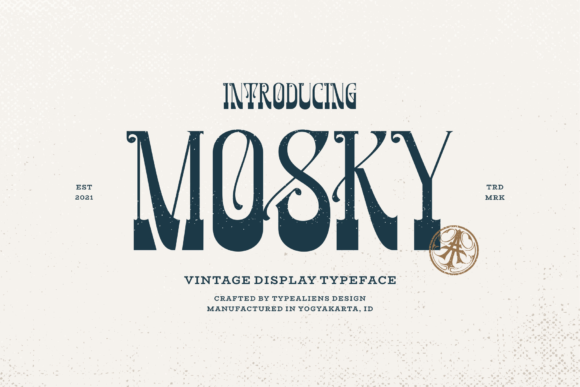
The Art of Distinctiveness: Why Mosky Redefines Vintage Typography for Modern Design
In an era where digital content is saturated with uniform, sans-serif minimalism and highly legible geometric typefaces, the demand for character has never been higher. Designers, brand strategists, and creative directors are increasingly looking for ways to inject soul, history, and tactile warmth into their visual narratives. This is where specialized display fonts become indispensable tools rather than mere aesthetic choices. Among the growing library of distinctive typographic assets, Mosky stands out as a prime example of how vintage aesthetics can be meticulously crafted to serve contemporary needs. By understanding the nuanced architecture of such a font, creators can unlock new levels of engagement and authenticity in their projects.
The Anatomy of a Display Font
To appreciate the value of a font like Mosky, one must first understand the distinction between body text and display typography. Body text is designed for endurance; it must remain invisible to the reader while facilitating comprehension over long passages. Display fonts, conversely, are designed to be seen. They act as the voice of the design, setting the tone before a single word is read. They require attention to detail, unique serifs, varied stroke weights, and specific historical references that evoke a particular mood or era.
Mosky exemplifies this philosophy through its neat craftsmanship and high level of detail. Unlike many vintage-inspired fonts that rely on heavy grunge effects or distressed textures to convey age, Mosky achieves its distinctiveness through precision. It captures the essence of classic letterforms without sacrificing clarity. This approach allows the font to function effectively in both large-scale applications, such as posters and headlines, and in smaller contexts where readability remains paramount. The result is a typeface that feels established and trustworthy, yet fresh and modern due to its clean execution.
Historical Resonance in Digital Spaces
Vintage typography does more than just decorate a page; it transports the viewer. When a designer selects a font with historical roots, they are invoking the cultural baggage associated with that period. Mosky, with its distinct display characteristics, draws upon the rich traditions of early 20th-century printing and signage. These eras were defined by a time when every letter was carved, cast, or hand-drawn with intention. There was no "default" style; every piece of communication had personality.
In today’s digital landscape, this sense of intentionality is rare. Websites and apps often feel sterile because they default to system fonts that prioritize speed and compatibility over character. By integrating a font like Mosky into a digital project, designers can break the monotony of the grid. The font’s detailed construction invites the eye to linger, encouraging users to slow down and engage with the content. This is particularly effective for brands that want to position themselves as heritage-focused, artisanal, or premium. The visual cues provided by the font subconsciously signal quality and care to the audience.
Practical Applications Across Industries
The versatility of a well-crafted display font lies in its ability to adapt to various industries while maintaining its core identity. Mosky is not limited to a single niche; its potential extends across multiple sectors where visual impact is crucial.
- Packaging and Product Design: For consumer goods, especially those in the food, beverage, or cosmetics sectors, packaging is the first point of contact. A bottle of craft beer, a box of artisanal chocolates, or a luxury skincare line can all benefit from the sophisticated vintage feel of Mosky. The font adds a layer of perceived value, making the product appear more curated and thoughtful.
- Editorial and Publishing: Magazines, journals, and independent publications often use display fonts for pull quotes, section headers, and cover lines. Mosky’s neatness ensures that these elements stand out against complex backgrounds without becoming illegible. It works particularly well in lifestyle and culture publications that aim for a retro-modern aesthetic.
- Event Branding: Festivals, exhibitions, and conferences need materials that capture attention quickly. Posters, tickets, and signage benefit from the bold presence of a distinct display font. Mosky can anchor a layout, providing a strong visual hierarchy that guides the attendee’s eye through essential information.
- Digital Marketing: In social media graphics and email campaigns, where space is limited and competition for attention is fierce, typography plays a pivotal role. Using Mosky for headlines in ad creatives can increase click-through rates by differentiating the brand from competitors who use generic templates.
Workflow Integration for Creators
For professional designers and hobbyists alike, the ease of integration is a critical factor in font selection. A font may look beautiful in isolation but fail if it is difficult to work with in standard design software. Mosky is engineered to be a wonderful asset to any font library, meaning it adheres to industry standards for kerning, ligatures, and character sets. This ensures that when placed in Adobe Illustrator, Photoshop, Figma, or InDesign, the text behaves predictably.
One of the key advantages of using a neatly crafted font is the reduced need for manual adjustment. Poorly designed vintage fonts often have inconsistent spacing or awkward intersections that require hours of fine-tuning. With Mosky, the designer can focus on composition and color rather than fixing typographic errors. This efficiency is invaluable for agencies working under tight deadlines or solo entrepreneurs managing their own branding. The font’s reliability allows for rapid prototyping and iteration, speeding up the creative process without compromising on quality.
Psychological Impact and Readability
Typography is a form of non-verbal communication. The shape of letters influences how we perceive the message they carry. Serifs, for instance, are often associated with tradition, reliability, and elegance. Sans-serifs suggest modernity, cleanliness, and efficiency. Mosky strikes a balance by offering the traditional appeal of serif details within a structure that respects modern readability standards.
This balance is crucial for avoiding the "unreadable novelty" trap. Many vintage fonts sacrifice legibility for style, which can frustrate readers and drive them away from the content. Mosky avoids this pitfall by maintaining clear counters (the open spaces inside letters) and consistent stroke widths. This makes it suitable not just for short headlines but also for mid-length text blocks where a bit of character is desired. Educators and researchers might find it useful for creating engaging handouts or presentation slides that retain academic seriousness while adding visual interest.
Considerations for Implementation
While Mosky offers numerous benefits, successful implementation requires thoughtful consideration of context. As a display font, it is most powerful when used sparingly. Overusing it in body text can lead to visual fatigue, as the human eye struggles to process high-detail characters over long distances. Instead, treat Mosky as a spotlight. Use it for titles, logos, and key messaging points, and pair it with a simpler, neutral sans-serif or serif for supporting text. This contrast creates a dynamic visual rhythm that keeps the design lively.
Color and background interaction are also important. Because Mosky is highly detailed, it performs best against solid or subtly textured backgrounds. Busy photographic backgrounds can compete with the intricate details of the letters, causing them to blur together. Designers should experiment with negative space around the text to allow the font’s unique features to breathe. Additionally, considering the medium is essential; what looks sharp on a high-resolution screen may lose some definition when printed at small sizes. Always test proofs in the intended final format to ensure the font’s distinctiveness survives the production process.
The Future of Niche Typography
As the internet becomes even more crowded, the trend toward hyper-personalization and niche branding will continue to grow. Consumers are developing a keen eye for authenticity, and they can easily spot generic, template-based designs. Fonts like Mosky represent a shift back to craftsmanship in the digital age. They remind us that type is not just a vehicle for words but an art form in itself. By incorporating such distinctive assets into their workflows, creators can produce work that resonates on a deeper emotional level.
The potential of Mosky lies in its ability to enhance any creation, regardless of the creator's skill level. It provides a shortcut to sophistication, allowing designers to achieve a polished, vintage look without needing to draft custom letterforms from scratch. For businesses, this means stronger brand recognition. For artists, it means greater expressive freedom. For educators, it means more engaging materials. In every case, the font serves as a tool for connection, bridging the gap between the past and the present through the universal language of design.
Ultimately, the decision to use a specific font is a strategic one. It reflects the values and identity of the communicator. Choosing a font that is neatly crafted, highly detailed, and distinctly vintage signals a commitment to quality and attention to detail. Mosky embodies these qualities, making it a worthy addition to any designer’s toolkit. Whether you are launching a startup, redesigning a website, or creating a personal portfolio, leveraging the power of distinctive typography can elevate your work from ordinary to exceptional. In a world of noise, standing out requires more than just a good idea; it requires a compelling voice, and sometimes, that voice is found in the curves and angles of a single letter.