Why True Story Is the Ultimate Choice for Playful, Authentic Design
In a digital landscape saturated with sleek, minimalist sans-serifs and rigid geometric typefaces, there is a refreshing wave of personality crashing onto the shores of graphic design. It’s not just about readability anymore; it’s about connection. It’s about conveying warmth, humor, and genuine human interaction at a glance. Enter True Story, a chunky, lettered font that doesn’t just sit on the page—it jumps off it. If you are looking to inject a sense of playfulness and authenticity into your next project, this display font might just be the missing piece of your creative puzzle.
We often underestimate the power of typography in setting the emotional tone of a piece. A headline isn't merely a container for words; it’s an invitation. When you choose True Story, you aren't just selecting a typeface; you are choosing a voice. That voice is friendly, approachable, and undeniably cute. But don’t let the whimsical appearance fool you—this font carries a weight of purpose that makes it surprisingly versatile across various industries, from education to lifestyle branding.
The Anatomy of Authenticity: What Makes True Story Stand Out?
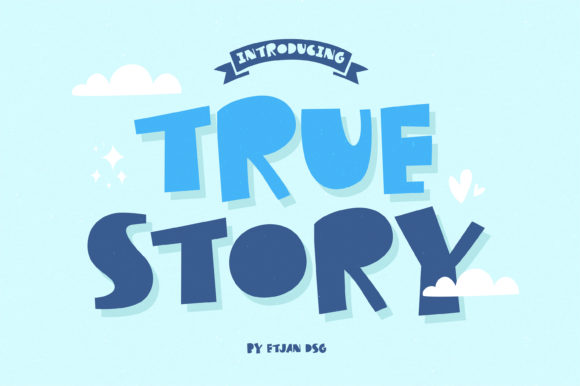
To understand why True Story works so well, we have to look at its visual characteristics. The font features a distinct "chunky" aesthetic, with rounded edges and generous spacing that mimics the hand-drawn feel of marker or crayon strokes without the inconsistency of actual handwriting. This balance is crucial. Pure handwritten fonts can sometimes struggle with legibility at smaller sizes or on certain backgrounds, but True Story strikes a perfect middle ground between organic charm and structural integrity.
The letters themselves seem to bounce. There is a slight irregularity in their alignment and height that prevents the text from feeling robotic. This imperfection is intentional. In a world where AI-generated content and stock photography are becoming ubiquitous, audiences are craving things that feel real. They want to see the human touch. True Story delivers that touch through its playful curves and bold presence. It feels like a friend telling you a secret, rather than a corporation broadcasting a mandate.
This quality of "authenticity" is what sets it apart from other display fonts. Many playful fonts lean too heavily into cartoonish territory, which can limit their use to very specific niches. True Story, however, maintains a level of sophistication that allows it to be used in more mature contexts while still retaining its fun edge. It’s cute, yes, but it’s also cool.
Perfect Partnerships: Where True Story Shines
While True Story is undoubtedly the king of children’s content, limiting its potential to just kids' activities would be a disservice to its versatility. Let’s explore some practical scenarios where this font can transform a design from mundane to memorable.
Educational Materials and School Projects
If you’ve ever tried to create engaging worksheets, flashcards, or classroom posters, you know the struggle. You need something that captures attention but doesn’t overwhelm the student. True Story is ideal here. Its clear, bold forms make it easy for early readers to decipher, while its friendly demeanor reduces anxiety around learning materials. Imagine a science poster about volcanoes or a history timeline for elementary school—the addition of True Story headlines can make these subjects feel like adventures rather than chores.
- Worksheets: Use it for titles and key vocabulary words to guide the eye.
- Posters: Create bulletin board headers that invite students to stop and look.
- Certificates: Add a personal touch to achievement awards that feels earned and celebrated.
Children’s Activities and Events
From birthday party invitations to summer camp brochures, the energy needs to be high and welcoming. True Story embodies playfulness perfectly. When designing flyers for local community centers or libraries, using this font signals immediately that the event is family-friendly and fun. It breaks down barriers before the guest even arrives.
Consider a flyer for a "Storytime Saturday." Pairing the title in True Story with illustrations of books and animals creates an immediate visual narrative. The font does half the work of setting the scene, allowing your imagery to take center stage without competing for attention.
Lifestyle Branding and Small Business
Perhaps the most surprising application of True Story is in modern lifestyle branding. Think of boutique bakeries, artisanal toy stores, or cozy cafes. These businesses thrive on creating a sense of home and comfort. A logo or menu header in True Story can convey that same warmth. It suggests that the brand is accessible, unpretentious, and focused on quality experiences.
For instance, a local bakery selling custom cakes could use True Story for their social media graphics. It aligns with the handmade, sweet nature of their products. It tells the customer, "We care about the details, and we’re having fun doing it."
Practical Considerations for Designers
Before you rush to add True Story to every design file, there are practical considerations to keep in mind. Like any tool, it has its strengths and limitations. Understanding these will help you use it effectively rather than overusing it.
Readability and Hierarchy
As a display font, True Story is designed to be read from a distance. While it is highly legible, it may become difficult to read in small body copy. The best practice is to use it for headlines, titles, pull quotes, and short phrases. Reserve standard, neutral typefaces for paragraphs and detailed information. This contrast creates a strong visual hierarchy, guiding the viewer’s eye naturally through your content.
For example, if you are designing a brochure, use True Story for the main section headers. Then, switch to a clean sans-serif for the descriptive text. This combination ensures that the design remains interesting without sacrificing clarity.
Color and Contrast
Because True Story has such a strong visual presence, it pairs beautifully with vibrant colors. However, be mindful of contrast. Light pastel backgrounds can sometimes wash out the chunky letters, making them harder to distinguish. Darker backgrounds or bold accent colors tend to make the font pop even more. Experiment with complementary colors to enhance the playful mood you’re trying to achieve.
Pairing with Other Fonts
Finding the right partner for True Story is key. Since it is already quite busy and expressive, it works best when paired with simple, understated fonts. A thin sans-serif or a classic serif can provide the necessary balance. Avoid pairing it with other decorative or script fonts, as this can create visual clutter and compete for the viewer’s attention.
Making Your Designs Come Alive
Ultimately, the goal of design is communication. And in today’s noisy media environment, standing out requires more than just good information—it requires emotion. True Story provides that emotional hook. It invites the viewer in, smiles at them, and says, "Let’s do something fun together."
Whether you are a teacher preparing for the new semester, a parent organizing a child’s birthday party, or a designer building a brand identity for a client who values authenticity, True Story offers a solution that is both aesthetically pleasing and functionally effective. It reminds us that design doesn’t always have to be serious to be successful. Sometimes, it just needs to be true to itself—and to its audience.
So, go ahead and experiment. Download the font, open your design software, and start playing. Notice how the letters interact with your images and how they change the overall vibe of your composition. You might find that your designs were waiting for this little burst of personality all along. By incorporating True Story into your workflow, you aren’t just adding text; you’re adding life. And in a world that often feels disconnected, that’s a powerful thing to offer.