Friendster Font Review: A Quirky Display Type for Niche Creative Projects
In the vast ecosystem of digital typography, finding a font that strikes the right balance between readability and distinct personality can be challenging. Most display fonts lean heavily into one direction: either strictly modern and minimalist or overly decorative to the point of distraction. Friendster occupies a unique middle ground. It is an incredibly quirky and sweet display font that defies standard categorization. While it may not serve as a primary body text for corporate reports, its specific aesthetic makes it an excellent tool for targeted creative applications.
This review evaluates Friendster based on its visual characteristics, practical utility, and suitability for various design contexts. The goal is to determine whether this typeface offers genuine value for professionals, creators, and hobbyists looking to add a specific emotional tone to their projects.
Visual Characteristics and Design Intent
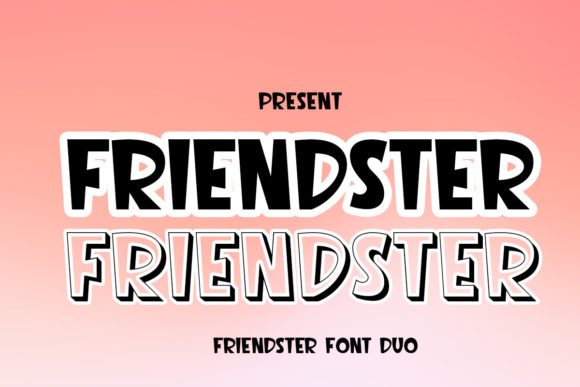
The defining feature of Friendster is its hand-drawn, slightly irregular structure. Unlike geometric sans-serifs that rely on mathematical precision, Friendster embraces imperfection. The letterforms are rounded, soft, and often exhibit subtle variations in stroke weight that mimic natural handwriting without sacrificing legibility. This "sweet" quality gives the font an approachable, friendly, and nostalgic feel.
The quirkiness comes from the playful deviations in baseline alignment and character spacing. These elements prevent the text from feeling rigid or sterile. Instead, the font feels alive, suggesting movement and casual interaction. This makes it particularly effective in contexts where warmth and approachability are desired over authority and formality.
Key visual traits include:
- Rounded Terminations: Letters end in soft curves rather than sharp angles, reducing visual aggression.
- Irregular Spacing: Character gaps vary slightly, creating a rhythmic, organic flow.
- Playful Proportions: Certain letters may be slightly exaggerated in height or width to enhance charm.
Primary Use Cases and Applications
Understanding where Friendster fits best requires analyzing its strengths. It is not a versatile workhorse font like Arial or Helvetica. Rather, it is a specialized tool designed for specific emotional resonance. Its best performance is observed in designs that require a touch of whimsy, nostalgia, or childlike wonder.
Cartoon and Animation Related Designs
One of the most natural homes for Friendster is in cartoon-related designs. Whether you are creating storyboards, character nameplates, or promotional materials for animated series, the font’s quirky nature complements illustrative styles perfectly. It mirrors the energy of hand-lettered titles found in classic Saturday morning cartoons or modern indie animations. The font does not compete with illustrations; instead, it enhances them by adding a layer of personality.
Children’s Games and Educational Materials
For developers and designers working on children’s games, educational apps, or print materials for early learners, Friendster offers high usability combined with engagement. Children are drawn to fonts that look less like "text" and more like part of the visual environment. The sweetness of the font reduces cognitive load for young readers while maintaining enough clarity to be decipherable. It signals to the user that the content is safe, fun, and accessible.
Social Media and Branding for Lifestyle Brands
While not suitable for all brands, Friendster can be highly effective for lifestyle-oriented businesses. Think bakeries, craft stores, parenting blogs, or boutique gift shops. In these sectors, the brand voice is often personal and community-focused. Using Friendster in headers, social media graphics, or packaging labels can instantly communicate a brand’s values of warmth and authenticity.
Usability and Technical Considerations
When integrating any font into a professional workflow, technical performance is just as important as aesthetics. Friendster performs well in terms of rendering across different platforms, but its application requires strategic restraint.
Legibility and Readability
Due to its decorative nature, Friendster should not be used for long-form body text. The irregularities that give it character can cause eye strain when reading dense paragraphs. Best practices suggest using it for headlines, pull quotes, buttons, and short labels. When paired with a neutral, highly readable sans-serif for body copy, Friendster can anchor a design without overwhelming the reader.
Pairing Recommendations
To maximize effectiveness, pair Friendster with clean, simple typefaces. A geometric sans-serif or a classic humanist serif can provide the necessary contrast to let the display font shine. For example, combining Friendster for headings with a font like Open Sans or Lato for body text creates a balanced hierarchy. The simplicity of the secondary font ensures that the quirks of Friendster remain the focal point.
Licensing and Accessibility
Before incorporating Friendster into commercial projects, verify the licensing terms. Many quirky display fonts come with restrictions on resale or embedding. Ensure you have the appropriate license for your intended use, whether it is web, print, or app development. Additionally, consider accessibility standards. While the font is visually appealing, ensure sufficient color contrast and size adjustments are made to maintain readability for users with visual impairments.
Strengths and Limitations
No typeface is perfect, and Friendster is no exception. Understanding its limitations is crucial for making an informed decision.
Strengths
- Distinctive Identity: It stands out in a sea of generic fonts, helping brands differentiate themselves.
- Emotional Connection: It effectively conveys friendliness, playfulness, and nostalgia.
- Versatility within Niche: It works well across various media types, from digital screens to printed merchandise.
Potential Limitations
- Limited Range: If the font family lacks multiple weights (bold, light, italic), it may restrict typographic hierarchy options.
- Context Dependency: It is inappropriate for formal, legal, or corporate communications where seriousness is required.
- Overuse Risk: Because it is so distinctive, overusing it can make designs feel childish or unprofessional if not balanced correctly.
Who Should Consider Friendster?
Friendster is best suited for creatives who prioritize mood and atmosphere over neutrality. Freelancers designing portfolios for artists, educators creating engaging classroom materials, and marketers targeting family-oriented demographics will find the most value in this font.
It is also a strong choice for hobbyists and small business owners who lack extensive branding resources. Friendster provides an instant "brand voice" through its inherent personality, reducing the need for complex logo design or extensive style guides. For a new bakery launching a website, for instance, using Friendster for the site title immediately communicates a welcoming, homemade vibe.
Final Assessment
Friendster is a valuable addition to any designer’s toolkit, provided it is used with intention. It is not a replacement for standard UI fonts or editorial typefaces. Instead, it serves as a powerful accent that can elevate specific elements of a design. Its quirky and sweet nature makes it ideal for projects aiming to evoke joy, comfort, and nostalgia.
For those willing to experiment with playful typography, Friendster offers a reliable way to inject personality into digital and print media. By respecting its limitations and pairing it appropriately, creators can leverage its unique charm to connect more deeply with their audience. In a digital landscape often dominated by cold minimalism, Friendster offers a refreshing return to human-centric design.